

Introduction
Search looks different now than it did two years ago.
You can still type a query into Google and get a list of blue links. But you might also see an AI-generated summary at the top of the page that answers your question directly. Or you might skip Google and ask ChatGPT instead, getting a conversational response that cites its sources.
This shift is AI search. It’s not replacing traditional search engines. It’s adding a new layer on top of them.
The change matters because millions of people now use these tools. Google AI Overviews appear on search results pages. ChatGPT has web search built in. Perplexity built its entire platform around AI-powered answers. Microsoft integrated AI into Bing.
If you work in SEO or digital marketing, you need to understand what AI search actually is. Not the hype about it. Not predictions about what might happen. Just the practical reality of how these systems work and why they matter.
This article explains AI search as a concept, shows you how it differs from traditional search, and covers the major platforms using it today.
How AI Search Works
AI search combines search functionality with generative AI. Instead of just finding and ranking pages, these systems read information from multiple sources and create new text that answers your question.
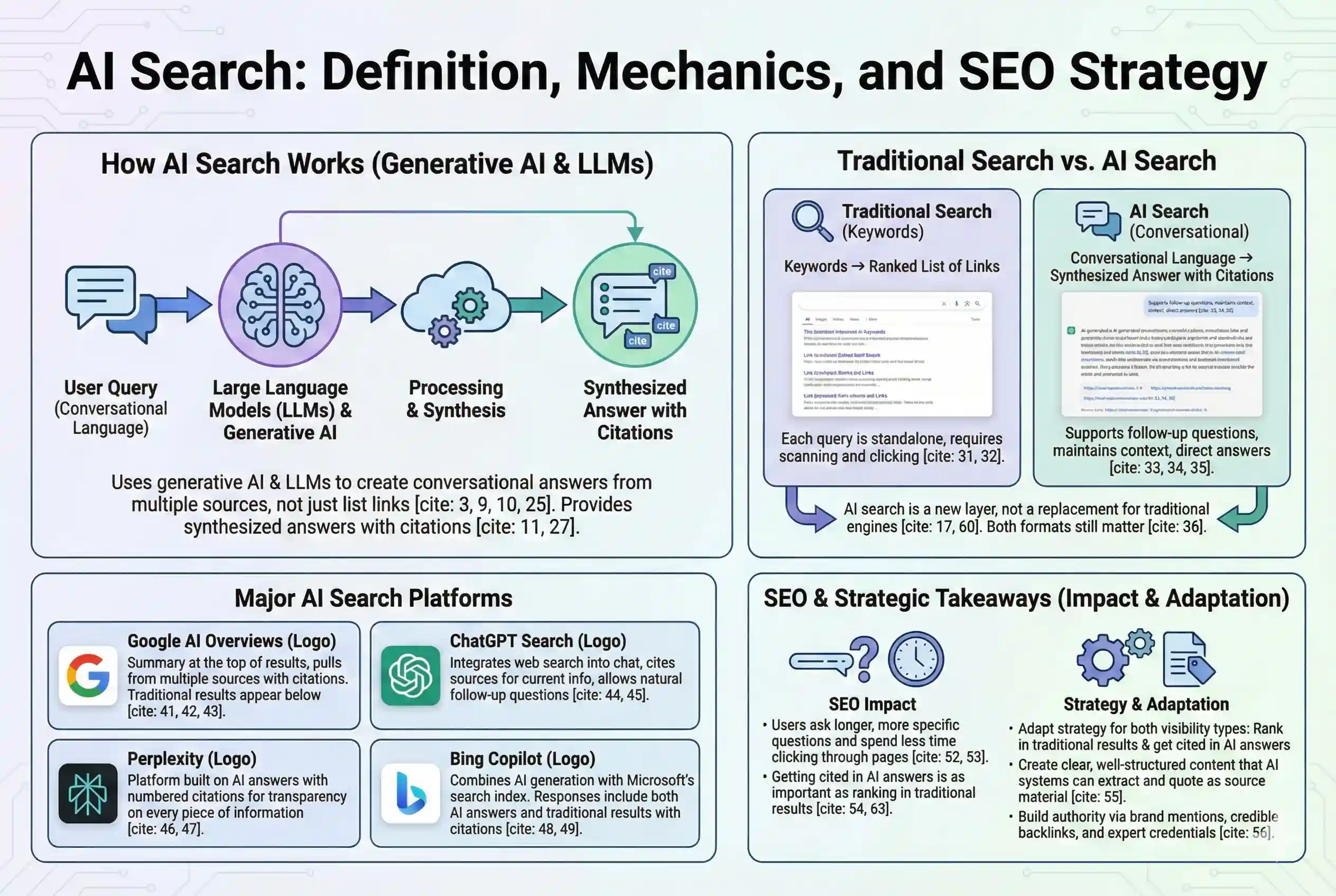
Large language models power these systems. When you ask a question, the AI interprets what you want to know, searches the web, finds relevant information, and writes a response that synthesizes what it found. The response includes citations showing which sources it used.
The experience feels conversational. You ask a question and get a direct answer, not a list of links. Citations appear throughout the response. You can ask follow-up questions, and the system remembers the context from your previous question.
AI Search vs Traditional Search
Traditional search engines work with keywords. You enter a short phrase, get a ranked list of pages, scan the results, and click through to read them. Each search query stands alone.
AI search handles conversational language. You can ask full questions with context. Instead of a list, you get a synthesized answer with sources cited within the text. Follow-up questions work naturally because the system maintains context across the conversation.
Both formats still matter. Google holds about 90% of the search market with traditional results. But AI search is growing for complex questions that need explanation. Users switch between platforms based on what they need, which means marketers need content that works for both traditional rankings and AI citations.
Major AI Search Platforms
Four platforms lead the AI search space, each serving different user needs.
- Google AI Overviews appear at the top of regular Google search results. The AI-generated summary pulls information from multiple sources with citations showing which sites Google used. Traditional search results still appear below.
- ChatGPT Search integrates web search into conversational chat. When you ask a question needing current information, ChatGPT searches the web and cites sources. The conversation continues naturally with follow-up questions.
- Perplexity built its platform around AI search with numbered citations for every answer. The platform emphasizes transparency, showing exactly where each piece of information came from.
- Bing Copilot combines AI generation with Microsoft’s search index across Bing, Edge, and Windows. Responses include both AI-generated answers and traditional search results with citations.
Why AI Search Matters for SEO
AI search changes how people find information and what they expect from search results.
People now ask longer, more specific questions. Queries become conversations with follow-up questions building on previous answers. Users spend more time reading AI-generated answers and less time clicking through multiple websites.
Getting cited in an AI answer matters as much as ranking in traditional results. Content needs to work as source material with clear, well-structured information AI systems can extract and quote. Authority signals extend beyond your website through brand mentions, credible backlinks, and expert credentials.
Traditional SEO fundamentals still apply. Site speed, mobile optimization, and quality content create the foundation for AI visibility. But new priorities around citations and multi-format content layer on top of existing work.
Strategic Takeaway
AI search represents a shift in how search engines deliver information, not a replacement for traditional search. The future includes both ranked results and AI-generated answers working together.
For marketers, this means adapting strategy to account for both types of visibility. Your content needs to rank in traditional results and get cited in AI answers. Understanding what AI search actually is gives you the foundation to adapt your strategy as the landscape continues to change.