

Introduction
Getting your freelance income Philippines remote work setup right from the start means fewer problems at tax time and no surprises when your first foreign payment arrives. Earning from foreign clients as a digital marketer in the Philippines comes with real paperwork obligations, and the BIR has no informal category for freelancers.
You are a self-employed professional the moment you receive payment outside a formal employment contract. The same registration rules apply whether you earn P20,000 a month or P200,000. This guide covers the exact steps to register with the BIR, choose the right payment setup for receiving USD from abroad, file your taxes correctly, and enroll in government welfare programs on your own. Everything here is specific to the Philippines and to the 2025 to 2026 regulatory period.
What the BIR Calls a Freelancer in the Philippines
The Legal Classification: Self-Employed Professional
The BIR does not use the word “freelancer.” Any income you earn outside a formal employer-employee relationship makes you a self-employed professional under Philippine tax law. This applies whether you run one project a year or work full-time for three US clients.
The scale of your operation does not change your obligations. A graphic designer earning P15,000 from a single contract faces the same registration requirements as a full-time SEO consultant billing P500,000 a year.
Why This Classification Triggers Immediate Obligations
Self-employed status activates three things at once: BIR registration, periodic tax filing, and mandatory social contribution enrollment. You cannot legally issue a Service Invoice to a foreign client without a Certificate of Registration from the BIR.
There is also a practical risk to staying informal. When untaxed foreign remittances reach certain thresholds in a Philippine bank account, the bank’s anti-money laundering systems can flag the account. Without a registered tax profile, this can lead to a frozen account while the bank investigates.
Self-Employed Professional (BIR definition): Any individual earning income outside a formal employer-employee relationship, regardless of the scale or frequency of their work.
How to Register with the BIR as a Freelancer in 2025
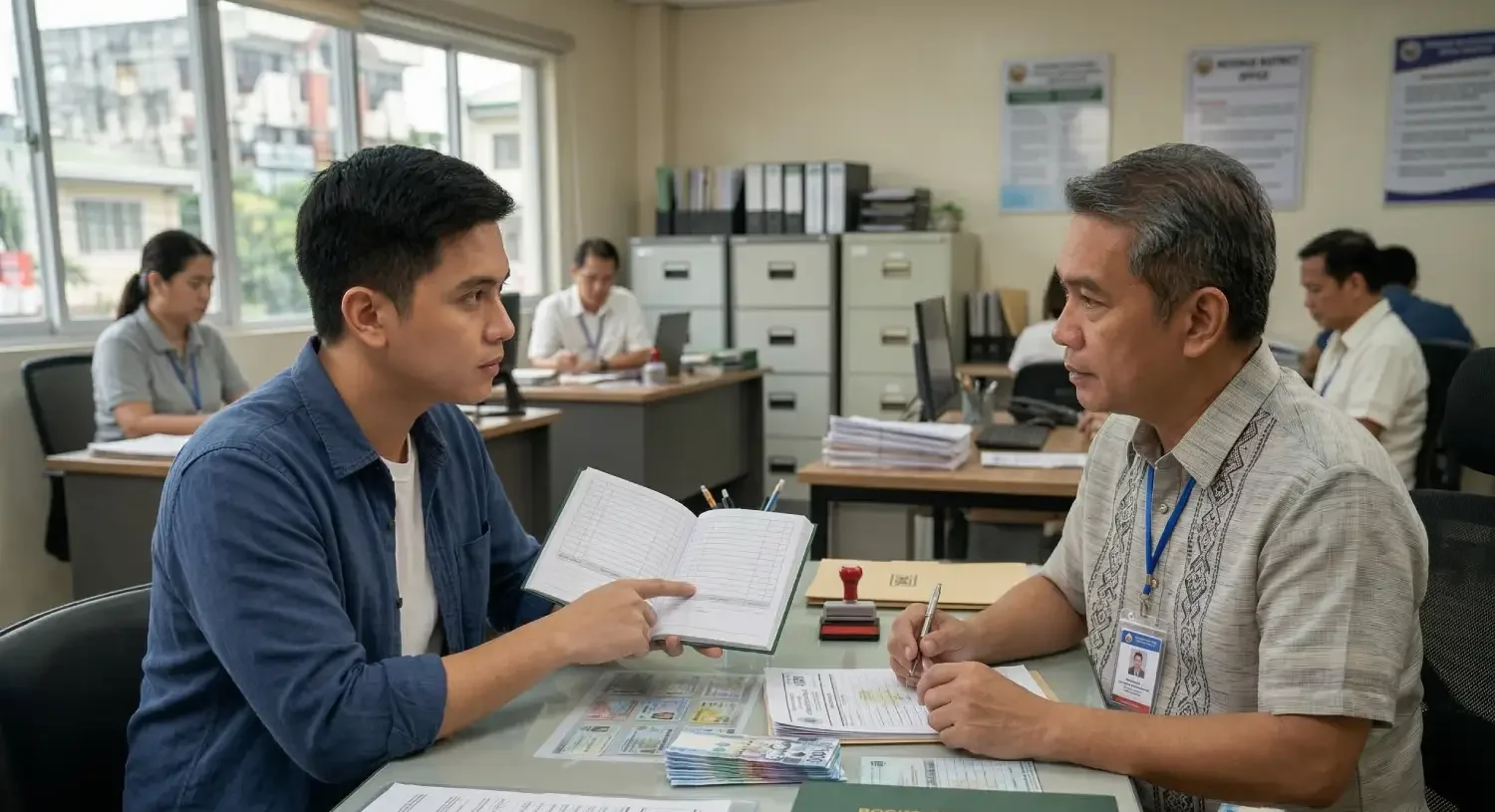
What You Need Before Going to Your RDO
Prepare these before your visit:
- BIR Form 1901, fully accomplished
- Valid government-issued ID (original and photocopy)
- Proof of address: Barangay Certificate, lease contract, or property title
If you provide services under your own name, such as writing, design, marketing, or development, you do not need a DTI Business Name Certificate. Pure professionals are exempt from that requirement.
Step-by-Step BIR Registration Process
- Download and accomplish BIR Form 1901
- Go to the Revenue District Office (RDO) that covers your home address
- Submit Form 1901 with your ID and proof of address
- Pay the P30 Documentary Stamp Tax (DST) — the P500 annual registration fee was abolished in 2025
- Receive your Certificate of Registration (BIR Form 2303) and TIN
- Purchase 4 to 6 columnar ledger books (8 or 12-column format) for your books of accounts
- Purchase authorized receipt booklets from a BIR-accredited printer — budget around P1,700 for new registrants
- File BIR Form 1906 to secure your Authority to Print (ATP) for Service Invoices
Online Registration Through ORUS
The BIR’s Online Registration and Update System (ORUS) lets you register remotely and generate QR-coded digital stamps for your books of accounts. In practice, some RDOs still require a physical visit or ask for additional documents not listed in the national guidelines, such as a birth certificate or a specific email registration form.
Call or email your RDO before you go to confirm what they currently require. This saves a wasted trip.
2024 vs. 2025 Registration Costs
Item | 2024 | 2025/2026 |
Annual Registration Fee | P500 (Form 0605) | Abolished |
Documentary Stamp Tax | P30 | P30 |
DTI Business Name Certificate | Required for Sole Props | Exempt for Pure Professionals |
Books of Accounts | Physical ledgers | 4 to 6 columnar ledgers required |
Authorized Receipt Booklets | ~P1,700 | ~P1,700 |
Service Invoices vs. Official Receipts: What Changed in 2026
Why Official Receipts Are No Longer Your Primary Tax Document
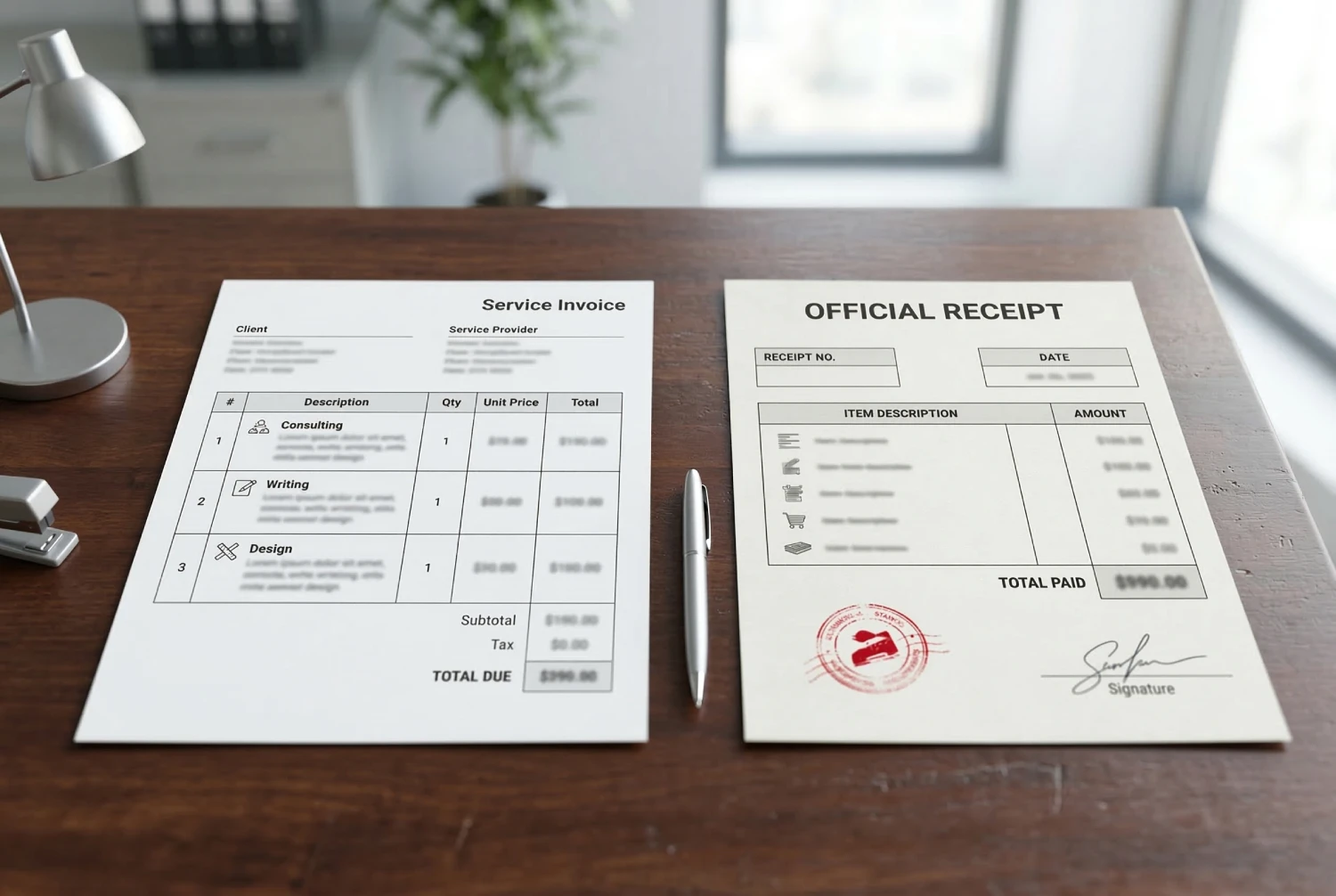
Under the Ease of Paying Taxes Act, the Service Invoice is now the primary legally recognized document for service transactions in the Philippines. The Official Receipt has been moved to a secondary role — it is now only proof of collection, not the document required for tax input claims.
If you are still issuing Official Receipts as your main billing document, you need to update your setup. File BIR Form 1906 to get an Authority to Print for Service Invoices through a BIR-accredited printer.
Service Invoice: The BIR-mandated primary document for substantiating the provision of services. Required for tax input claims under the Ease of Paying Taxes Act (2025/2026).
How to Receive International Payments as a Filipino Freelancer
Why Your Payment Method Affects Your Bottom Line
All income earned by a Philippine resident is taxable here, regardless of where the client is based or which currency they paid in. The method you use to receive payment determines exactly how much of your foreign earnings you keep after conversion fees and exchange rate losses.
Three Ways to Receive Payment from Foreign Clients
Method | Settlement Speed | Currency Control | Notes |
SWIFT Bank Transfer | 3 to 5 business days | None — bank auto-converts to PHP | Fees from correspondent banks apply |
Digital Platform (PayPal, Wise) | 1 to 2 business days | Low — platform sets the rate | Faster, but fee structures vary |
USD Virtual Wallet | Near-instant | Full — you choose when to convert | Best option for protecting FX margin |
How USD Wallet Accounts Work for Filipino Freelancers
A USD wallet receives client payments in dollars and holds the balance until you decide to convert. You are not forced to exchange at whatever rate the bank sets on the day the wire arrives.
Platforms like Wise, Payoneer, and select Philippine digital banks offer this setup. When the peso is weak against the dollar, you hold. When the rate improves, you convert. The difference between forced auto-conversion and a timed, user-initiated conversion can add up to thousands of pesos per month for a full-time remote worker. All USD balances you withdraw or convert are still reportable income under BIR rules.
Tax Filing Requirements for Self-Employed Freelancers in the Philippines
The Two Tax Options Available to You
- Percentage Tax (3%): Applied to gross receipts. Filed quarterly. Available to freelancers earning below P3 million annually.
- 8% Flat Tax: Applied to gross receipts in place of both percentage tax and regular income tax. Filed annually. Available to qualifying earners who declare this option at registration.
You must state your chosen tax type when you register with the BIR. Talk to a licensed CPA if your income is irregular or expected to grow past the P3 million threshold, as the choice has compounding effects on what you owe each quarter.
Your BIR Filing Schedule
- BIR Form 2551Q (Quarterly Percentage Tax): Due April 25, July 25, October 25, and January 25
- BIR Form 1701 (Annual Income Tax Return): Due April 15 each year
Keep a record of every Service Invoice you issue: the date, the client, the amount in foreign currency, and the peso equivalent at the time you converted or received the funds.
How to Enroll in SSS, PhilHealth, and Pag-IBIG as a Freelancer
Why Social Contributions Are Mandatory for Self-Employed Professionals
No employer files these on your behalf. As a self-employed professional, you register with each agency and remit contributions yourself. Not enrolling does not exempt you — it accumulates unpaid obligations that compound over time.
How to Register for Each Program
- SSS: Register as a self-employed member and choose a monthly contribution bracket based on your declared income. Contributions cover pension, disability, sickness, and maternity or paternity benefits.
- PhilHealth: Register as a Self-Earning Individual (SEI) and select a contribution bracket aligned to your gross income. This gives you access to national health insurance coverage.
- Pag-IBIG (HDMF): Register as a voluntary member. The minimum monthly contribution is P100, but higher contributions increase your eligibility for housing loans.
How to Structure Your Income as a Filipino Freelancer
Keep Business Receipts Separate from Personal Spending
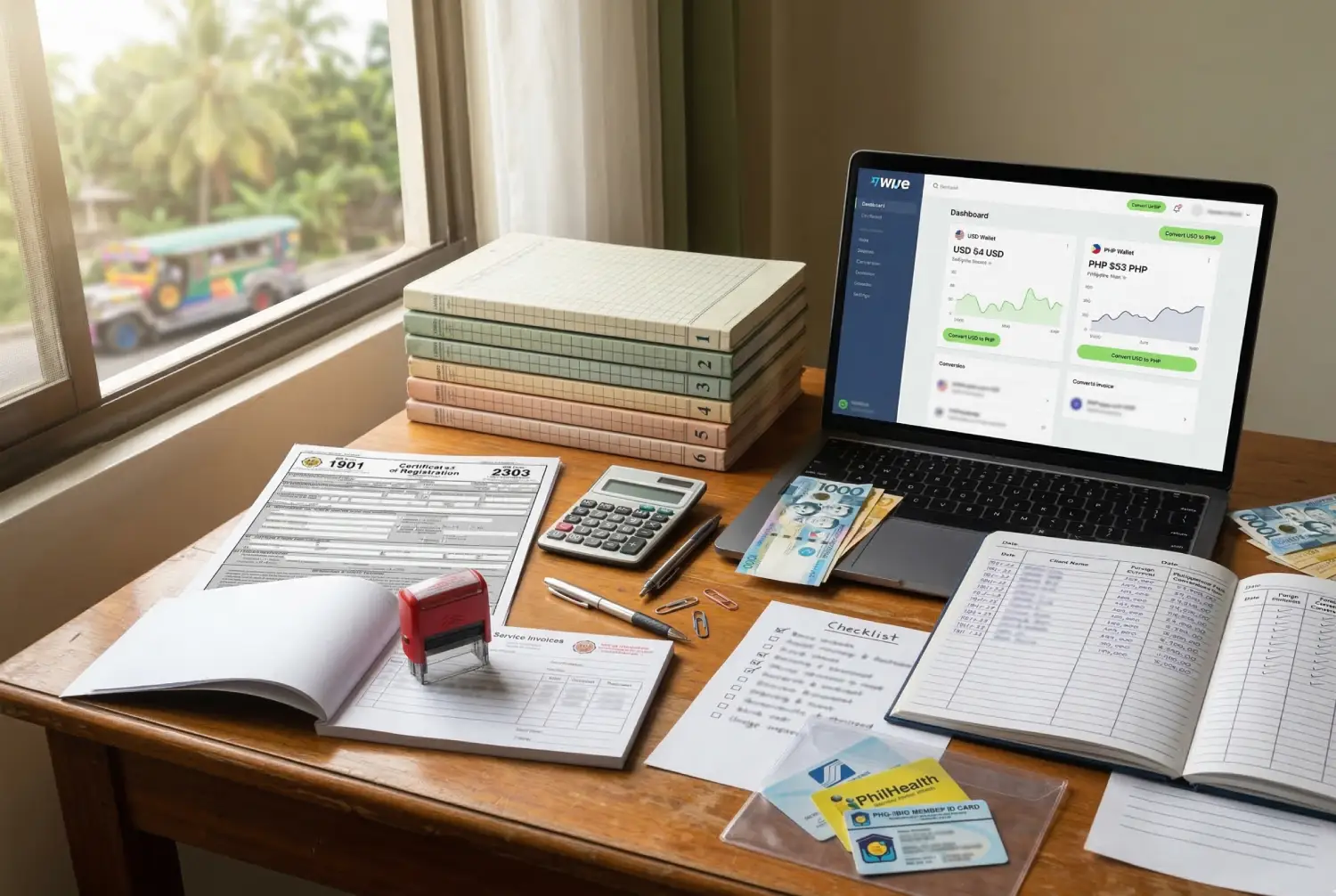
Open a dedicated bank account or digital wallet for client payments only. All foreign remittances go there first before you transfer anything for personal use. This makes quarterly filing faster, reduces the chance of missing taxable income in your records, and lowers your audit risk.
Track Gross Receipts for Every Billing Cycle
Log every Service Invoice you issue: the date, client name, amount billed in foreign currency, and the PHP equivalent at the time you converted or received the funds. The BIR requires businesses to keep records for at least 10 years — a simple date-sorted folder of your Service Invoices and bank conversion records is enough at the freelance level.
Your Setup Checklist
Follow these steps in order to get fully set up as a compliant, registered freelancer in the Philippines:
- Go to your RDO and submit BIR Form 1901 with your ID and proof of address
- Pay the P30 Documentary Stamp Tax — the P500 annual fee no longer applies
- Receive your Certificate of Registration (Form 2303) and TIN
- Purchase your columnar ledger books and authorized receipt booklets (~P1,700)
- File Form 1906 to get your Authority to Print for Service Invoices
- Open a USD wallet account to receive foreign payments with full currency control
- Enroll in SSS, PhilHealth (as a Self-Earning Individual), and Pag-IBIG as a self-employed member
- Choose between the 3% Percentage Tax or the 8% Flat Tax at registration
- Set calendar reminders for quarterly BIR filings and your annual income tax return on April 15
If you are still figuring out which digital marketing services to offer and how to build a sustainable remote career, start with the Filipino digital marketer location-independent career roadmap before working through this setup guide.